AI at Home and at Work: Pregnancy Support, Workplace Disruption, and Ethical Questions


In this week’s BAIC Center Newsletter:
Parent’s Corner – “Can AI Offer Emotional Support During High-Risk Pregnancy?”: Kristina explores whether AI chatbots may help reduce stress and anxiety among individuals experiencing high-risk pregnancies.
This Week in AI — “Meta’s Wholesale Adoption of AI has Caused Mass Unrest Among Meta Employees”: Jeremy investigates how Meta’s aggressive AI integration strategy is raising concerns among employees about surveillance, job security, and the growing role of AI in performance evaluation.
Can AI Offer Emotional Support During High-Risk Pregnancy?
Pregnancy can be emotionally stressful, especially for individuals experiencing high-risk pregnancies involving medical complications, uncertainty, or concerns about fetal health. During these periods of increased stress, access to consistent emotional or mental health support may become especially important, yet it is not always readily available.
A recent study published in Scientific Reports examined whether an AI-based emotional support chatbot could help reduce anxiety and stress among individuals experiencing high-risk pregnancies. The study included 300 participants recruited from Al-Zahraa Hospital in Egypt. Over 4weeks, participants used Replika, an AI chatbot designed to simulate supportive conversation through natural language processing and machine learning.
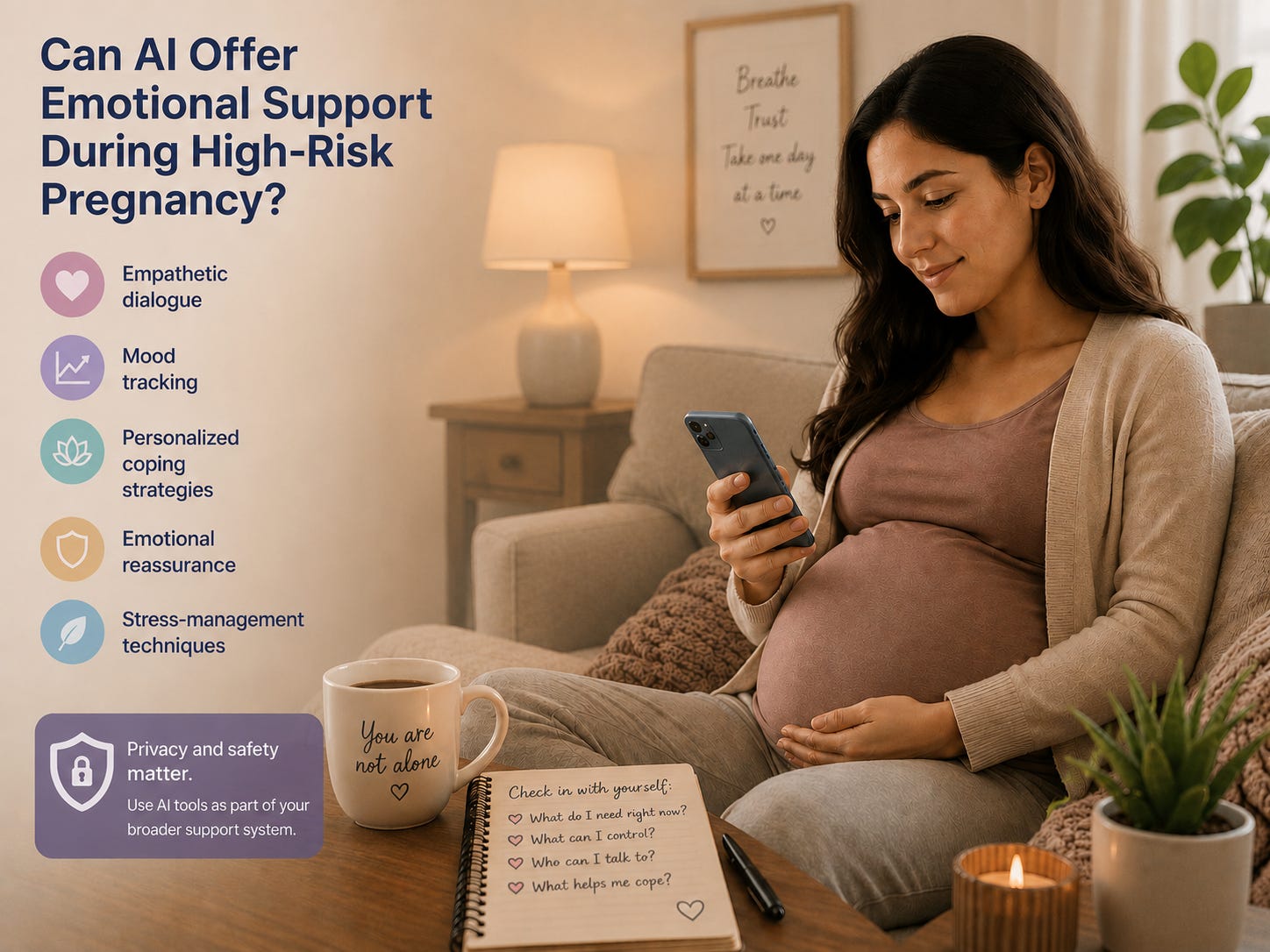
According to the study, Replika offered empathetic dialogue, mood tracking, personalized coping strategies, emotional reassurance, and stress-management techniques. Participants were also trained to use the app and encouraged to interact with it daily during the intervention.
What did the study measure?
Researchers assessed anxiety and stress using the Pregnancy Anxiety and Stress Rating Scale (PASRS). They also used the Chatbot Usability Scale (BUS-11), which measured participants’ experiences with the chatbot’s accessibility, functionality, communication quality, privacy, and responsiveness.
After four weeks, participants showed a statistically significant decrease in anxiety and stress. Mean PASRS scores dropped from 54.05 before the intervention to 10.15 afterward (p < .001).
Participants also rated the chatbot positively overall, especially in conversation quality, responsiveness, accessibility, and functionality. Privacy received comparatively lower ratings, suggesting that trust and data security remain important issues for AI-based emotional support tools.
Questions to consider
For individuals using AI emotional support tools during stressful periods, one helpful approach may be to use the tool as a starting point for reflection, not as the only source of support.
After interacting with an AI chatbot, individuals might ask themselves:
Did this interaction help me feel calmer or more informed?
Is this something I should also bring up with a healthcare provider?
Do I want reassurance from someone who knows me personally?
Am I using this tool to support coping, or to avoid reaching out?
Who else is part of my support system right now?
What should we be careful about?
The findings are promising, but they should be interpreted carefully. The study used a pre-post design without a control group, so it cannot prove that the chatbot alone caused a reduction in anxiety and stress. Notably, Elkashif et al. (2026) describe AI-based emotional support systems as a “promising complementary approach” to traditional care.
Additionally, the study provides limited detail about mental health safety procedures within the intervention itself, as well as the long-term safety guidelines needed for using AI emotional support tools in sensitive healthcare contexts. As these tools become more common, questions surrounding privacy, reliability, safety, and appropriate use may become increasingly important.
As tools like Replika become more common, what do you think about utilizing AI for emotional support? Let us know in the comments.
Source: Elkashif, M. M. L., Rahmath, M., Mohamed, S. A., et al. (2026). The impact of artificial intelligence-based emotional support tools on anxiety and stress levels in high-risk pregnant women. Scientific Reports. https://doi.org/10.1038/s41598-026-49427-w
Written by: Kristina Kealoha
Meta’s Wholesale Adoption of AI has Caused Mass Unrest Among Meta Employees
Category: AI in the workplace
Source: https://www.nytimes.com/2026/05/08/technology/meta-ai-employees-miserable.html
Meta has recently implemented employee tracking on company devices to help train its AI models. Additionally, Meta has been pushing its employees to use AI as much as possible. Some of this has been done by tracking how many tokens employees use and factoring that data into performance reviews. This, along with the news that Meta will lay off 10% of its employees to offset AI R&D costs, has caused significant concern among Meta employees. The rapid acceleration of AI adoption and the unease among Meta employees may be a blueprint for what is to come at other companies that are sprinting toward the goal of incorporating AI into everything.
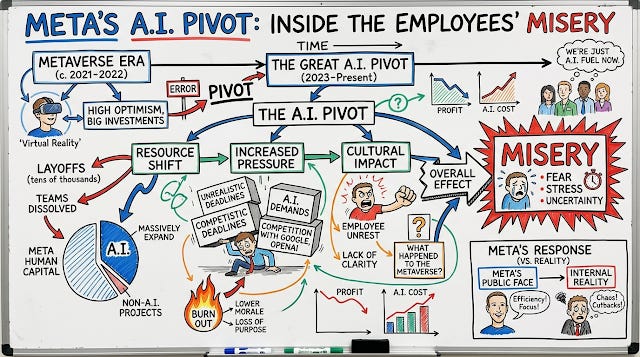
Photo by: Earl Cotten via Pocket Democracy
Written by: Jeremy Gordon
Our BAIC website has recently been updated. Check it out to see our latest studies on how AI chatbots and AI systems are shaping young people’s relationships, development and well-being.