Testing an AI tool for Neurodivergent Users


In this week’s BAIC Center Newsletter:
AI Tool Testing: Riley tests an AI platform that was created to help people who are neurodivergent with tasks such as interpreting messages and communicating. With the potential to be a resource for people who are neurodivergent, Goblin Tools can help reduce communication stress and boost confidence for users.
Testing Goblin Tools
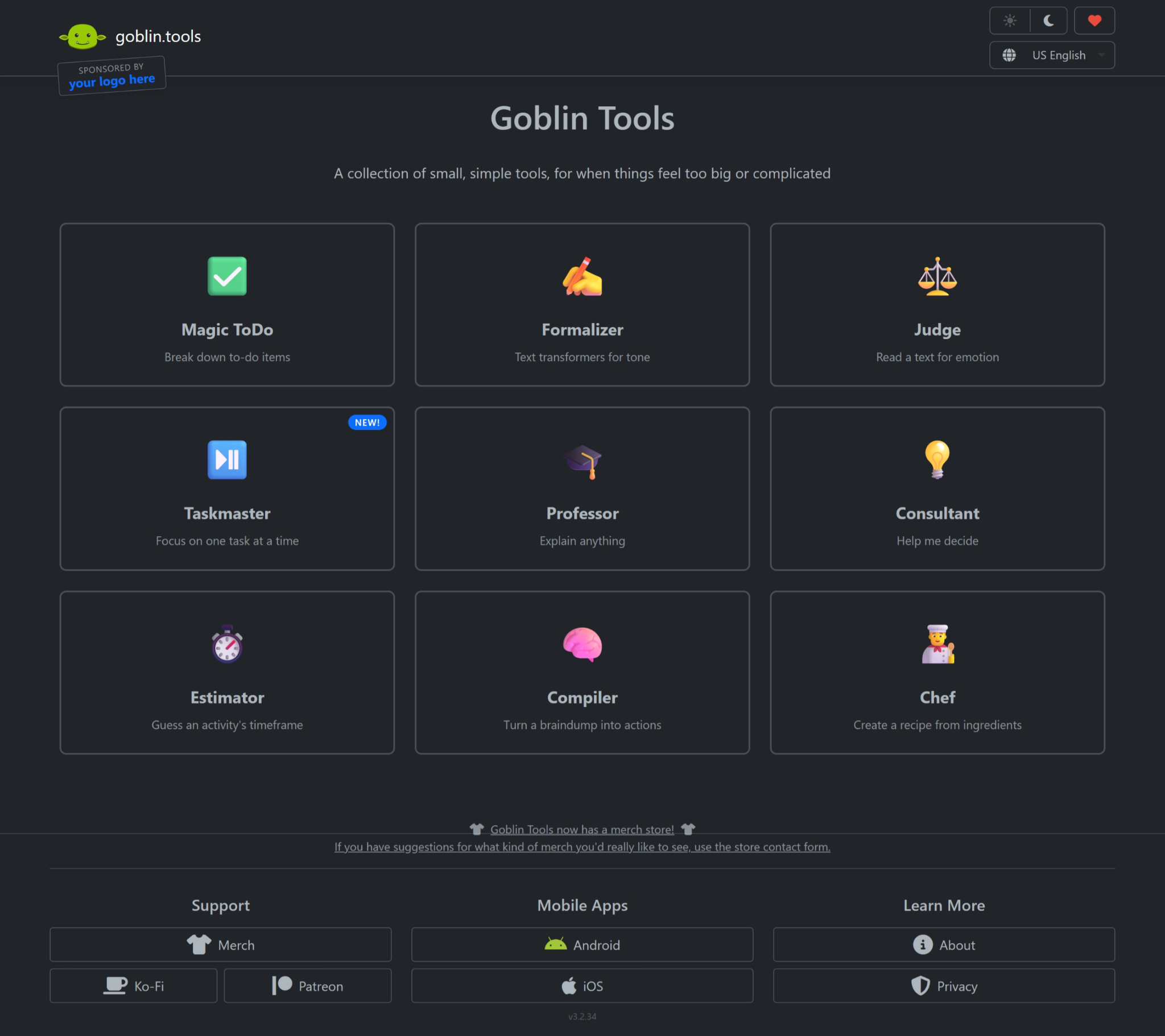
Goblin Tools is a free platform featuring nine AI-powered tools designed to make overwhelming tasks more manageable for neurodivergent users. This website requires no account setup and is accessible on both phones and computers. Goblin Tools is also available as a $2.99 iOS app, though the free website version offers identical features. The platform is beginner-friendly and powered by OpenAI.
One of Goblin Tools’ strongest features is its focus on navigating social nuance and emotional tone. Two standout tools, Judge and Formalizer, are designed to help users more confidently interpret messages and communicate with others. These functions may be especially beneficial to neurodivergent students who face challenges with tone interpretation, social communication, or self-advocacy.
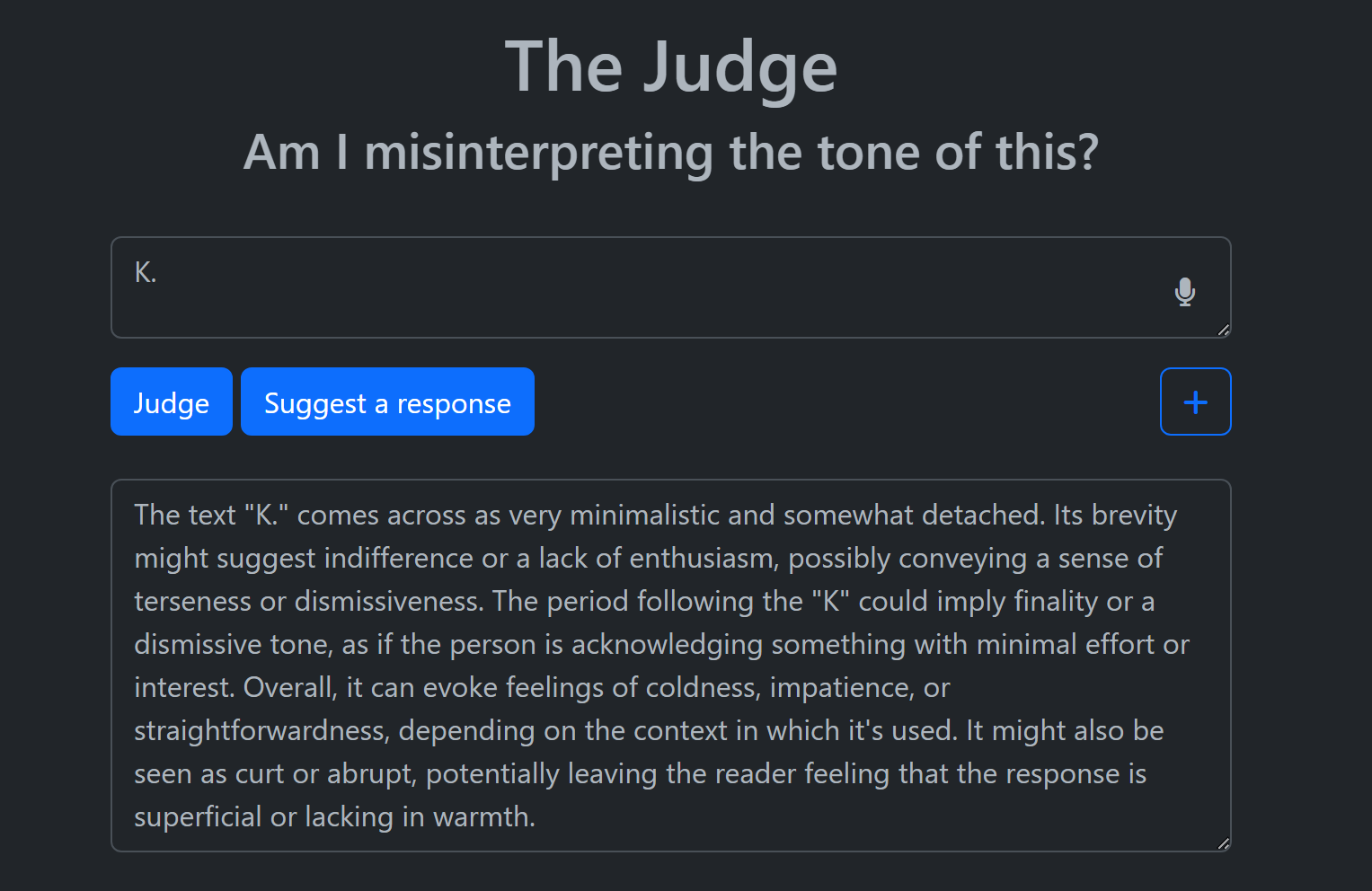
The Judge analyzes messages to help users interpret the emotional tone and implied meaning beyond the literal words.
Test 1: Short, Ambiguous Responses
Inputs: Sure, K, Okayyyy, Fine, Do whatever
Notes: When given short or vague prompts, the Judge emphasizes the importance of context. Instead of assigning a definite meaning, it offers several possible interpretations and explained how the tone could shift depending on the situation.
Test 2: Slang
Inputs: that’s sick, you ate that, bro cooked, bro is cooked
Notes: The tool demonstrated an impressive understanding of modern slang terms and internet language. Judge clearly explained phrases that would typically be considered confusing or indirect.
Test 3: Emojis as modifiers
Inputs: I hate him✨, you’re actually insane 💀 , that’s nice 🤨, haha yeah 😅
Notes: When emojis accompanied text, Judge first explained the wording itself and then analyzed how the emojis altered the tone. The tool showed a complex understanding of colloquial meanings conveyed through emoji use.
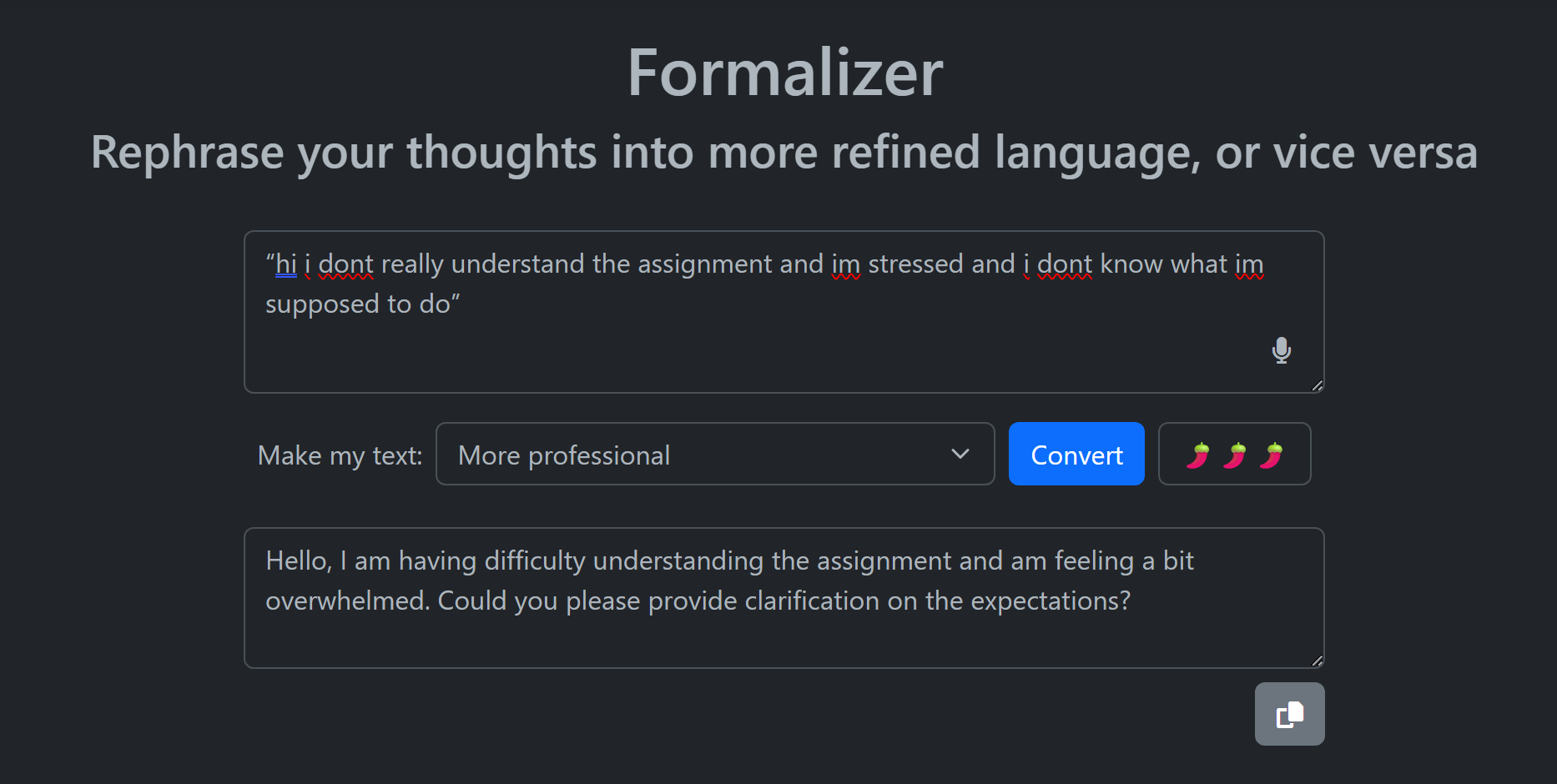
The Formalizer tool rewrites thoughts into different tones and communication styles. This can be especially beneficial to help neurodivergent students properly adjust communication with teachers, peers, or authority figures.
Test 1: Academic Overwhelm
Input: “hi i dont really understand the assignment and im stressed and i dont know what im supposed to do”
Notes: One of Formalizer’s most practical applications is quickly elevating casual or emotional language to be suitable for school and work contexts. The more professional, more formal, and more technical modes in Formalizer were particularly effective for crafting appropriate messages to instructors.
Test 2: Sensory Advocacy
Input: “The room is really loud and I can’t focus. What can I do?”
Notes: Formalizer adapted informal wording while maintaining the original concern and emotion. For self-advocacy situations, settings like more sociable, more formal, and less emotional produced the most effective results.
Test 3: Emotional Conflict
Input: “You ignored me earlier and I am so mad at you”
Notes: For addressing interpersonal conflict calmly, the less snarky and more sociable settings were most helpful. Interestingly, the tool could also work in the opposite direction by helping users communicate more emotion when needed.
Findings
Both the Judge and Formalizer tools demonstrate strong potential to support neurodivergent students in navigating social communication and ambiguous language. These tools particularly excel in translating indirect messages into more explicit, understandable terms.
However, some limitations remain. Human communication is highly nuanced, and tone cannot always be determined from text alone. Without the full conversational context or vocal delivery of a message, even advanced AI cannot definitively state the speaker’s intent. As a result, these tools should be viewed as supportive aids rather than error-free interpreters of social meaning.
Despite these drawbacks, Goblin Tools offers an accessible form of cognitive scaffolding that can reduce communication stress and increase confidence in both academic and interpersonal settings.
Written by: Riley McCarthy
Our BAIC website has recently been updated. Check it out to see our latest studies on how AI chatbots and AI systems are shaping young people’s relationships, development and well-being.